Executive Summary
Hong Kong's residential building stock faces a mounting crisis — not the fault of any single party, but of an ecosystem of incorporated owners, property managers, construction contractors, and regulators each acting rationally within a system that entrenches the status quo — has set every building on an inevitable path toward Dai Wai Sau (大維修): a full-building renovation overhaul practice that is unsustainable and carries profound risks to human lives, personal safety, financial assets, and residential stability.
The evidence presented in this paper demonstrates that this outcome is not inevitable. Through a pioneering five-year initiative invluding three years of live implementation at Bel-Air — one of Hong Kong's most prominent private residential estates — we have successfully applied the breakthrough Homegevity™ solution and developed a Tailormade Blueprint that eliminated a projected HK$1+ billion Dai Wai Sau requirement while creating measurable, validated value for 2,775 homeowners.
If this paradigm shift is adopted city-wide, HK$159 billion in owner equity can be created and reclaimed. More significantly, Hong Kong holds a unique competitive advantage — comparable to its position in FinTech — to become the global innovation hub for Homegevity™ and property technology (PropTech) to form a new sustainable growth and technology ecosystem.
"An ounce of practice is worth a ton of theory" — no matter how sound the theory, what matters is whether it works in the real world.
Key Figures at a Glance
1. The Risks and Limitations of Dai Wai Sau
What is Dai Wai Sau?
Dai Wai Sau (大維修) refers to a comprehensive, full-building renovation and overhaul practice — typically involving structural elements, façades, waterproofing, mechanical and electrical systems, and common areas. In Hong Kong's high-density residential context, these projects are enormous in scale, duration, and cost/cost overrun while posing significant health and safety risks. [1]
The term has come to represent not just the physical works, but an entire ecosystem of conflicting and incoherent interests: property management companies, construction contractors, subcontractors, and consultants.
Much of this can be traced back to the 2010 Ma Tau Wai Road building collapse, which exposed the risks of unmaintained aging structures and led to the government's Mandatory Building Inspection Scheme in response.
The Human and Financial Cost
Dai Wai Sau is, at its core, a construction project — and construction projects carry an inherent accident-risk profile common to job sites everywhere. What makes Dai Wai Sau different is location: this "job site" is a building where thousands of residents continue to live, work, and raise families throughout the works. A risk profile designed for an isolated construction site is instead borne by an occupied community.
The risks of Dai Wai Sau, therefore, extend far beyond financial inconvenience. Construction sites within occupied residential buildings create significant hazards to human lives and assets — dust, noise, chemical exposure, structural and fire risks, and the psychological toll of prolonged construction in one's home to name a few.
No dollar figure can or should stand in for the value of a human life — this paper does not intend to suggest otherwise. But for the purposes of economic analysis meaningful to owners weighing real financial decisions, globally recognized regulatory frameworks already assign a statistical value to life for public-health and safety cost-benefit purposes, and that framework is the most relevant lens available here. When measured against the US Department of Health and Human Services' statistical valuation of a human life at approximately HK$100 million,[10] the true cost of the current paradigm becomes a matter of public health and safety — not just property economics.
Financially, the burden falls directly on individual owners. Dai Wai Sau projects typically require special lump sum contributions on top of management fees — demands that can reach hundreds of thousands of Hong Kong dollars or more per unit, with no guarantee of proportional value return. For elderly owners on fixed incomes, the financial burden can be devastating. [3]
The Cost of Inaction
Wang Fuk Court Timeline
Flagged for inspection in 2016 due to age. A mandatory renovation project budgeted at ~HK$300 million began in 2024 after roughly eight years of planning. On 26 November 2025, a fire broke out during the Dai Wai Sau project. Flammable EPS boards and scaffolding netting accelerated the blaze across all seven blocks. Fire alarm systems were reported faulty or allegedly disabled. The result: Hong Kong's deadliest fire in decades — and a tragic case of what deferred maintenance and substandard Dai Wai Sau execution looks like at full scale.
The Structural Limitations of the Current Paradigm
The traditional maintenance model for residential developments in Hong Kong is structured around deferred or reactive, transactional maintenance — wait until it breaks, replace it when it fails. Only a very small percentage of developments have attempted to practice Preventive Maintenance. Even so, both reactive and preventive approaches eventually lead to the necessity of Dai Wai Sau for private residential developments due to systemic and interdependant complexities of existing ecosystem dynamics. [3]
This misalignment is structural and systemic, and every party within the existing ecosystem is acting rationally within its own constraints. Owners' corporations are voluntary bodies of laymen, understandably focused on immediate and short-term needs rather than long-term technical stewardship. Property management companies are stretched thin by day-to-day operational demands and price-driven tendering cycles that leave little room for long-term strategy.
The construction industry — a vital pillar of Hong Kong's Northern Metropolis development strategy — faces its own labour shortages and must stay focused on safety and compliance within its existing mandate. And regulatory bodies operate within a legislative framework where the right of private ownership carries with it the responsibility of private stewardship. None of these parties is positioned, individually, to break the cycle. The professional accreditation pathways, the tendering processes, the management fee structures, and the regulatory framework all reinforce the status quo. Changing it requires a paradigm shift: a new model, a new profession, and new institutions built to complement — not replace — the strengths of the existing ecosystem.
2. The Bel-Air Case Study: Demonstrated Success of the New Paradigm
The Catalyst
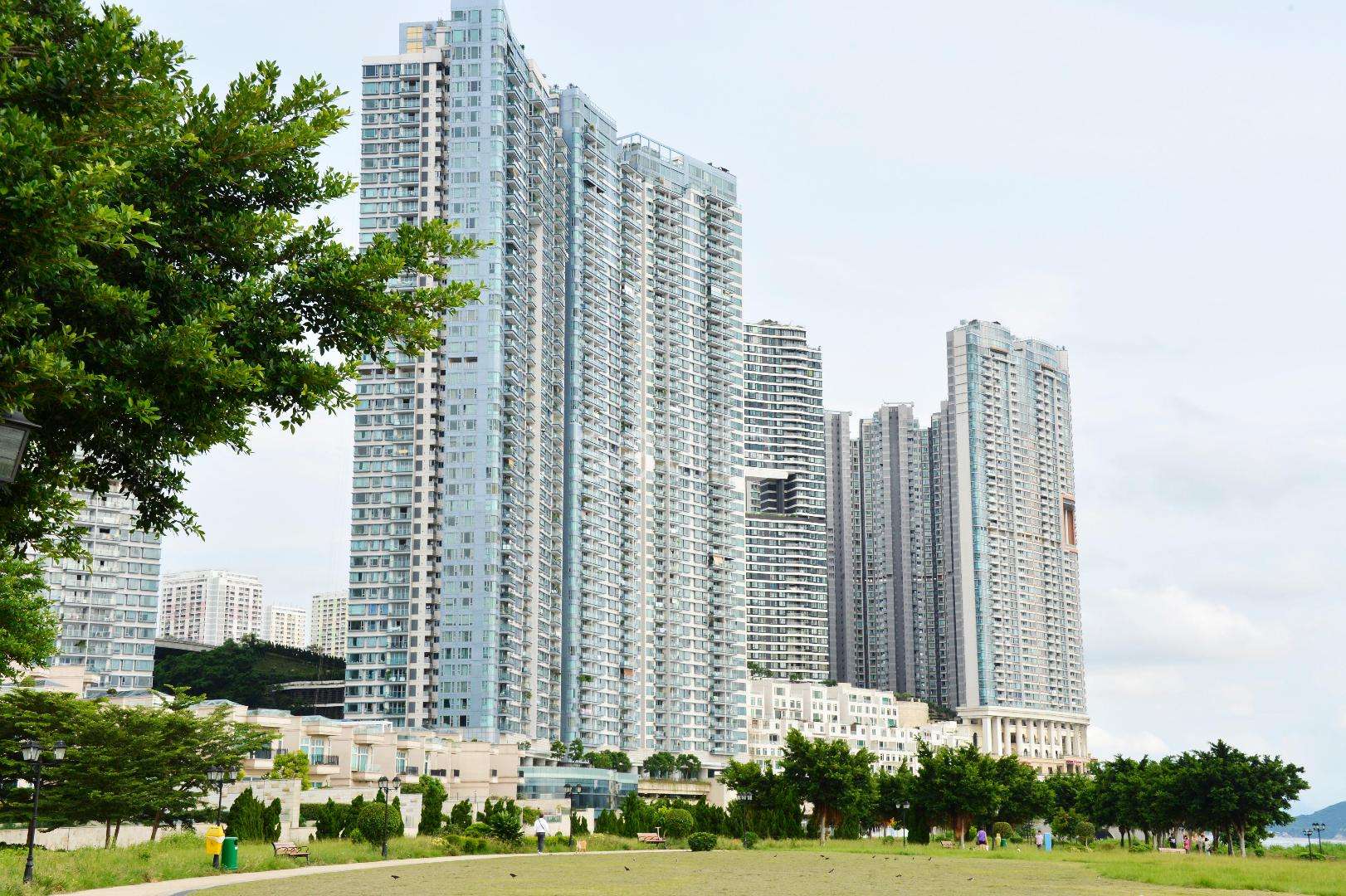
In 2022, the property management company serving Bel-Air — a premium private residential development comprising multiple towers and over 2,775 units at Pokfulam, Hong Kong, then still under 20 years old — presented the owners' corporation with a Dai Wai Sau proposal. The estimated cost: HK$1.057 billion, phased from 2033 onward — averaging approximately HK$380,000 per unit, a conservative figure given that comparable Hong Kong Island private developments have since seen Dai Wai Sau quotes exceed this amount.
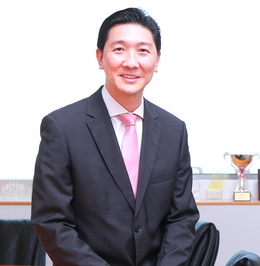
Facing the enormous cost to property and lives, the owners entrusted Ha Wing On Allen, MH, then serving as Chair of the Repair and Maintenance Sub-Committee, to initiate a fundamental re-examination of the building's condition, needs, and long-term management strategy.
The Diagnosis
A comprehensive building diagnosis was conducted across the full Development Asset Inventory Register — far beyond the structural and façade assessments typical of a Dai Wai Sau proposal. Some examples included: structural integrity, façade and waterproofing, lift systems, fire services, MVAC, plumbing and drainage, electrical distribution, BMS / IoT integration, green building performance, carpark management, landscaping, and security systems.
The Tailormade Blueprint
The project unfolded across three distinct phases. Phase 1 — Initiation (2023) — saw the formation of a project team combining external support with upgraded technical managers at Bel-Air, tasked with scoping a comprehensive long-term strategy through innovation. Phase 2 — Comprehensive Diagnostics (2024) — conducted a full Development Asset Inventory Register diagnosis spanning every major building system and parts. Phase 3 — the Tailormade Blueprint (2025–2026) — translated that diagnostic foundation into a tailor-made solution for Bel-Air, tested through 12 innovation roundtable sessions for feasibility and decision-analysis rigour.
The twelve sessions convened defined and adopted smart and cutting-edge solutions from across the real estate, technology, engineering, and finance sectors. The objective: to design a comprehensive, data-driven, long-term innovative solution that would maintain and create value whilst pivoting away from Dai Wai Sau.
The Blueprint maintained the consistent allocation of 22–23% of the annual management fee revenue for preventive maintenance already being practiced in Bel-Air, without affecting the management fee paid by residents. The developed blueprint has since continued to be steered in partnership with the property manager for its ongoing implementation.
The Results
The results are validated: the HK$1.057 billion Dai Wai Sau overhaul has been entirely eliminated. In other words, over HK$1 billion in value has been created for Bel-Air's 2,775 homeowners — value that stays in their pockets as well as the Hong Kong economy.
Bel-Air: Results Summary
3. Scaling to Hong Kong's Full Housing Stock
Hong Kong's Aging Building Stock
Hong Kong's residential building stock is aging rapidly. By 2036, approximately 20,000 private residential developments across the territory are projected to reach or exceed 30 years of age. [1]
This building aging crisis is a city-wide challenge of the first order — one that, left unaddressed through the current paradigm, will impose a combined liability of over HK$201 billion on Hong Kong homeowners by 2046.
HK$159 Billion in Reclaimed Asset Value
The HK$159 billion figure represents the aggregate asset value reclamation potential across Hong Kong's full private residential building stock — the difference between the total projected Dai Wai Sau financial burden under the current paradigm, and the cost of equivalent outcomes under the Homegevity™ model.
This is not a theoretical abstraction. It is the product of applying the proven success achieved and asset value created at Bel-Air — towards other private residential developments city-wide.
Methodology. 28,000 private residential buildings projected to be aged above 50 years by 2046 (HKIS / URA). Average 60 units per building. HK$120,000 per flat for comprehensive rehabilitation works (URA Building Rehab Platform, Buildings Department reference cost schedule). New Paradigm residual assumes ~80% Dai Wai Sau reduction as the conservative outcome on New Paradigm solution consistent with Deloitte predictive maintenance benchmarks (10–20% uptime improvement, 70% breakdown reduction). HK$96K per-flat figure implies HK$159B reclaimed across ~1.65M affected units. All figures are indicative estimates for illustrative purposes.
4. The Birth of a New Profession and Next-Gen Talents
The Homegevity™ Professional
The paradigm shift cannot be achieved through technology alone. It requires a new type of professional: the Homegevity™ practitioner — a bridge builder and mediator between owners and property management, combining deep building knowledge with data literacy, innovation capability, sustainability expertise, and the human-centred stakeholder leadership needed to operate within complex multi-stakeholder organisations. In practice, they act like Longevity Medical Doctors for individual residential developments — applying science, innovation, and professionalism to represent owners in the ongoing care and longevity of their property assets.
The distinction matters as much as it does for precious art pieces, cultural artifacts, or national treasures: casual upkeep by an untrained hand is fundamentally different from stewardship by a trained conservator — the model West Kowloon Cultural District applies to its own collections. Hong Kong's homes deserve the same standard of professional care.
This profile does not currently exist in sufficient numbers in Hong Kong's talent pipeline. An assessment of existing degree pathways shows why. Latest science in Intelligent Building Technology Management offers direct, structured training in the AI, IoT, and smart building integration skills the role demands — and even then, with low exposure to stakeholder leadership. On the other hand disciplines such as Building Surveying, Civil Engineering, and Architecture provide strong technical grounding critically needed to safeguard construction quality and safety in the brick and mortar construction industry. Creating this profession requires coordinated action across universities and professional bodies — establishing new curriculum pathways, accreditation standards, and career incentives that make Homegevity™ an attractive and prestigious vocation.
Why Homegevity™?
Existing Paradigm vs Homegevity™
| Existing Paradigm | Homegevity™ |
|---|---|
| Led by Incorporated Owners & Property | Bridged by Human Centric Homegevity™ Professional |
| All roads lead to DWS | Early intervention |
| Static construction focus | Data-driven lifecycle management |
| Short-term cost control | Asset value stewardship |
| One-off large scale overhaul projects | Ongoing steering of properly defined minor works |
| Deterioration starts again | Estate home longevity |
| Poor cost effectiveness & market inefficiency | Most effective on estates with extensive facilities |
| Inherently high safety risks | Future-proof safety modelling |
| Social & environmental burden | Social & environmental sustainability |
| — | Oriented to benefit from continuing PropTech Advancements |
5. Hong Kong as a Global Proptech Hub
Hong Kong's crisis is, paradoxically, its competitive advantage. No other city in the world has faced the intersection of extreme property value density, aging high-rise residential stock, sophisticated financial markets, and world-class innovation infrastructure in quite the same combination.
Hong Kong's younger residential developments — those under 25 years of age — have a unique opportunity to pivot early and join Bel-Air as Next-Generation Residential Developments, future-proofed by Homegevity™. The shift mirrors the automobile industry's transition to New Energy Vehicles: early movers who adopt the new paradigm ahead of a forced, crisis-driven transition capture disproportionate value and avoid the risk premium borne by those who wait.
The city that solves Dai Wai Sau will have developed the intellectual property, the professional talent, the institutional frameworks, and the proven track record to export that solution to every high-density residential city in Asia Pacific and beyond — Tokyo, Singapore, Seoul, Sydney, Shanghai, Mumbai. The market is enormous.
This is the Homegevity™ vision. Not just to save Hong Kong's homes — but to turn the city's most painful lesson into its most valuable export.
Conclusion
The evidence is clear. The technology exists. The proven success of Bel-Air is ready for application city-wide. What remains is the collective drive towards a safe and sustainable future — from owners, developers, policy makers, and the next generation of Homegevity™ buildings who will carry this paradigm shift from one estate in Pokfulam to every building in Hong Kong, and beyond.
To close, we compare the three futures available to any estate, the multi-dimensional risk profile of each scenario, and the human‑centred verdict on what is truly at stake.
Three Futures for Your Estate
Comparative view of the most common, current 'best practice', and Homegevity™ — across budget allocation, lifecycle cost, outcome, and risk level.
| Scenario | Budget Share Dedicated to Predictive R&M | Lifecycle Cost Multiplier vs Timely Baseline | Outcome | Risk Level |
|---|---|---|---|---|
|
Most Common Suppressed R&M, Dai Wai Sau inevitable. |
Negligible % allocated to repairs & maintenance (reactive, ad‑hoc) — most spend is staff and basic operations. Extra lump sum contribution for Dai Wai Sau | Up to 22.5× baseline cost once full Dai Wai Sau is triggered. | Equity wiped out, multi‑year disturbance, elevated human and community risk, repeated cycle after restart. |
Extreme High structural, financial, and social risk. |
|
Current 'Best Practice' Adequately resourced reactive/preventive maintenance, Dai Wai Sau deferred but inevitable. |
Approtioned % of management fee nominally allocated to repairs & maintenance. Extra lump sum contribution for Dai Wai Sau | 4× baseline cost — Dai Wai Sau arrives later, but still arrives. | Relatively safe until Dai Wai Sau, then the same scaffolding, hot works and restart cycle above. |
High Lower near‑term risk, same long‑term endpoint. |
|
Homegevity™ Professionally led, early intervention, data-driven lifecycle management, asset value stewardship and more. |
22–23% ring‑fenced to transparent, performance‑based annual R&M allocation. | ~1× baseline cost — Dai Wai Sau eliminated from the planning horizon. | Building health maintained, equity preserved, disruption minimised, city‑wide Dai Wai Sau liability transformed into reclaimed asset value. |
Low Controlled structural, financial, and community risk. |
Multi-Dimensional Risk Profile by Scenario
Composite risk across structural integrity, financial liability, community hazard, government exposure, asset value loss, and Dai Wai Sau probability for each scenario.
The True Price of Neglect
HK$6.8B + 4.1B
168 lives
One event. One building. HK$6.8B in housing value destroyed, HK$4.1B raised by the HKSAR Government's official "Support Fund for Wang Fuk Court in Tai Po", with HK$1.2B already committed to 11 emergency projects alongside other grants and allowances for affected residence — and a human cost no number can capture.
Good Is Not Good Enough
4×
lifecycle cost
Even well-managed estates face a near-inevitable Dai Wai Sau event. The risk profile is identical to the worst case — just deferred. Delay is not safety.
An Industry Transformation
HK$159B
Untapped Value
A necessary shift towards sustainable stewardship — striking gold by safeguarding our city, our community, and our homes.
References & Citations
View all citations ▼
- Buildings Department — Mandatory Building Inspection Scheme (MBIS): statutory inspection requirements for buildings over 30 years (10-year cycle); Wang Fuk Court mandatory renovation programme (HK$300M budget); post-fire emergency reached about HK$4.1B, with HK$1.2B already committed to 11 emergency projects, alongside other grants and allowances for affected residents
- Urban Renewal Authority (URA) — Maintenance Assistance Scheme documentation; building rehabilitation programme data; HK$70B ageing-stock repair estimate to 2046.
- Hong Kong Consumer Council — Study on Property Management Services of Private Residential Buildings (2023): management fee composition, repairs & maintenance allocation benchmarks, special fund prevalence.
- Census & Statistics Department (C&SD) — Hong Kong Annual Digest of Statistics: private residential unit stock count (1.68M units); demographic and housing data underpinning per-unit financial calculations.
- Electrical and Mechanical Services Department (EMSD) — Statutory inspection and maintenance codes for lifts, escalators, fire service installations, and building electrical systems.
- Fire Services Department (FSD) — Post-incident investigation reporting on Wang Fuk Court fire alarm system status (26 November 2025); fire safety compliance standards for residential buildings under active renovation.
- Hong Kong Housing Bureau — Budget 2026 flat buyback allocation (At HK$6.8B with HK$4B in public funds and $2.8B in donations); post-Wang Fuk Court relief and rehousing programme.
- Insurance Authority of Hong Kong — Claims settlement data; total industry liability estimate of US$334M (~HK$2.6B).
- South China Morning Post — Destroyed homes, cancelled events: Hong Kong counts economic cost of Tai Po fire (Nov–Dec 2025 reporting)
- U.S. Department of Health and Human Services, Office of the Assistant Secretary for Planning and Evaluation (ASPE) — Guidelines for Regulatory Impact Analysis: Standard RIA Values (2026).
- Deloitte — Predictive Maintenance and the Smart Factory: 10–20% uptime improvement, 70% breakdown reduction, 25% maintenance cost reduction.
- McKinsey Global Institute / Royal Institution of Chartered Surveyors (RICS) — Lifecycle cost frameworks and predictive maintenance ROI benchmarks supporting the ~1.0–1.1× longevity paradigm multiplier versus reactive maintenance baselines.
- National Conference of State Legislators and Pew Charitable Trusts — Strategies for Deferred Maintenance in State-Owned Buildings (Dec 2025)
- Wholebuilding Design GuideL APPA, NBS — Cost of deferred maintenance cost multiplier 4x to 8x
- Canadian Condominium Institute (CCI) — The Cost of Deferred Maintenance
- IFMA Optimizing Building Management with a Lifecycle Approach
All internal project documentation citations refer to materials prepared for the innovation and live application journey from 2021–2026.
All financial figures in Hong Kong Dollars (HK$) unless otherwise stated. Exchange rate reference: US$1 ≈ HK$7.78. The Wang Fuk Court fire occurred on 26 November 2025. Data correct as of May 2026.
廣東話版本
[PLACEHOLDER — 完整廣東話文章翻譯]
請將以下全文(由行政摘要至結論及參考資料)替換為經確認的繁體中文(廣東話)翻譯。
結構與英文版本完全一致:行政摘要、第1至5章、結論、參考資料及引用。
所有數據框、圖表及引用上標亦應保留於相應段落。
普通话版本
[PLACEHOLDER — 完整普通话文章翻译]
请将以下全文(由执行摘要至结论及参考资料)替换为经确认的简体中文(普通话)翻译。
结构与英文版本完全一致:执行摘要、第1至5章、结论、参考资料及引用。
所有数据框、图表及引用上标亦应保留於相应段落。